

How to Do a Ceiling Fan Light Replacement Safely in Australia
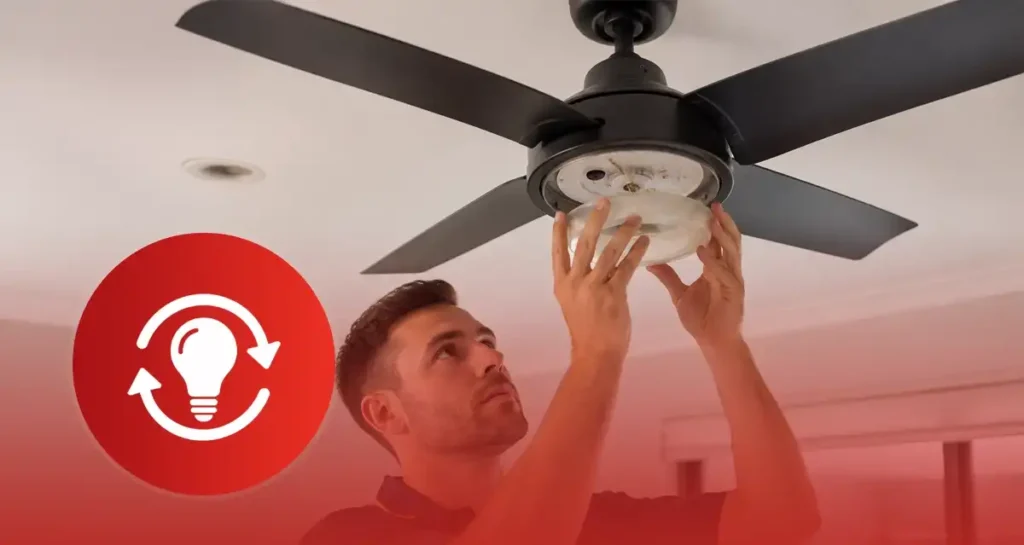
As an experienced electrician in Perth, I know a ceiling fan light replacement can look simple at first, especially when the fan still works and only the light has stopped.
Sometimes it is just a ceiling fan light bulb replacement. Other times, the issue could be a faulty ceiling fan LED light, a damaged light kit, a loose connection, a switch problem, a remote-control fault, or something deeper in the circuit.
In this guide, I’ll walk you through the safe checks, how to tell the difference between a basic fan light replacement and a more serious fault, and when to stop before things get risky.
At Dynamic Group, I’d say this clearly: changing a compatible globe or shade may be fine, but complicated issues should be left to licensed residential electricians.
And if you’re planning a full ceiling fan replacement, understanding how to install a ceiling fan can help you see what’s involved and why proper ceiling fan installation installation should be handled by a licensed electrician.
Can You Replace a Ceiling Fan Light Yourself in Australia?
Can I replace the ceiling fan light myself, or do I need to call someone?
Yes, sometimes — but only for the easy, non-wiring parts.
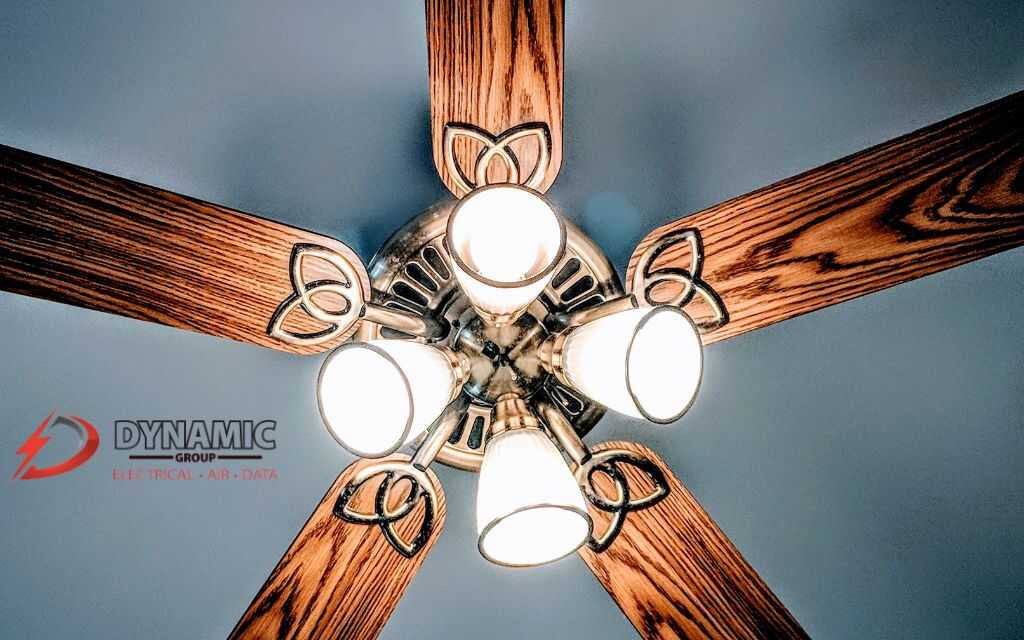
If it’s just a ceiling fan light bulb replacement, you can replace the globe yourself, provided the fan design permits easy access to the bulb without risk and proper replacement is used.
Light bulbs are an example of a component that may be replaced without electrical expertise when it can be done safely.
Anything that has to do with wiring is where you should stop. LED fan light replacement may include replacing the LED driver, internal receiver, terminals or fixed electrical connections.
Electrical wiring work is defined as installing, repairing, altering, removing, or adding to an electrical installation and requires an electrical licence or certificate before undertaking such work.
| Task | Can You DIY? | Our Advice |
|---|---|---|
| Replace a compatible globe | Usually, yes | Match the cap type, wattage, and globe size |
| Replace a glass cover or shade | Usually, yes | Only if no wiring is exposed |
| Replace a hardwired light kit | No | Book a licensed electrician |
| Replace a fan LED light module or driver | No | This is electrical work |
| Replace light with ceiling fan | No | This involves fixed wiring and proper installation |
Fan light replacement is DIY friendly only when it ends at the globe or cover. When it comes to replacing LED ceiling light parts, it is time to engage the services of licensed electricians.
Do-it-yourself electrical work by an unlicensed person is risky as it can make your home vulnerable to electrocution or fire.
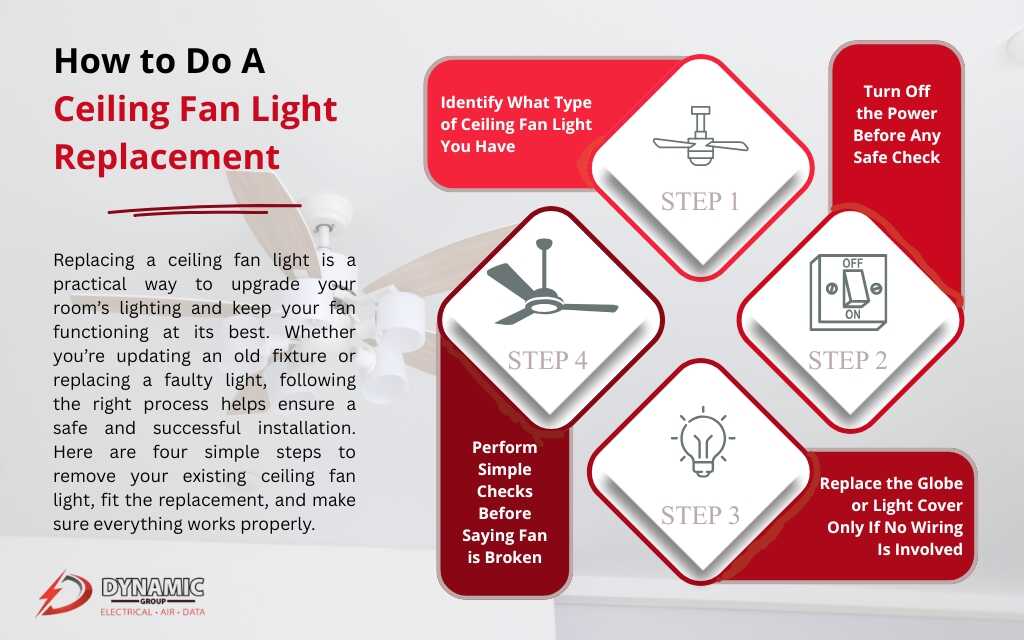
Step 1: Identify What Type of Ceiling Fan Light You Have
When replacing a ceiling fan light, the first thing to check is not only the ceiling fan’s brand, but also the light’s. Take into account the real light style.
That’s because a simple ceiling fan light bulb replacement is far different from installing an integrated LED light replacement or a full fan light replacement.
| Ceiling Fan Light Type | What It Usually Means |
|---|---|
| Standard Screw-In Globe | This can be in an Edison screw globe. Before replacing it, ensure it matches the cap, shape, size, and wattage. |
| Bayonet Globe | Common in Australian houses. The Australian Government’s Energy Rating guide recommends that users replace LED lamps with a Bayonet or Edison screw base, the correct size, shape and voltage. |
| Ceiling Fan LED Light Panel | This can not be a typical globe. A ceiling fan LED light replacement may involve a panel or driver. |
| Replaceable LED Module | Certain fans have the option for LED fan light replacement, but the component must match the exact model. |
| Fan Light Kit | This is typically more complex than just changing a globe and may need a licensed electrician to do. |
| Remote-Controlled Fan Light | The issue may be the globe, receiver, remote, or internal wiring. |
| Older Pull-Cord or Wall-Control Fan | The light fault could be in the switch, fitting, or fan body, not just the globe. |
Before purchasing, verify the model number, wattage rating, globe shape, cap type and manufacturer instructions. It will save you the time and hassle of purchasing the wrong part, turning a simple ceiling fan LED light replacement into a bigger headache.
This is also important in Australia, as not all of the overseas parts will be suitable for local homes. Electrical equipment sold under the Electrical Equipment Safety System must comply with safety requirements, and all in-scope electrical equipment must be marked with the Regulatory Compliance Mark (RCM).
Which is why I would be wary of buying any cheap parts online, or ones that claim to help you replace LED ceiling light fittings.
Step 2: Turn Off the Power Before Any Safe Check
Before I touch a ceiling fan for any ceiling fan light replacement, I slow things down and make the area safe first. I know it sounds basic, but this is where many small jobs become risky.
Here’s a simple safety check:
| Before You Check the Fan Light | Why It Matters |
|---|---|
| Turn the fan and light off | Any basic checking and maintenance must be undertaken when the power is off. |
| Let the globe cool first | A hot globe can burn you, particularly if it has been on for a while. |
| Use a stable ladder | Ladders should be placed on a flat, stable surface and that three points of contact be maintained when climbing. |
| Keep the area dry | Water and electricity don’t mix! Do not use or touch electrical equipment when their hands are wet or when their hands are in or near water. |
| Do not open wiring compartments | Never attempt electrical work yourself, and always ensure that your electrician is licensed |
Remember that changing a compatible globe is one thing. Still, it’s not a safe DIY check if you’re opening the fan body, touching the terminals, checking the internal wiring, or attempting to replace the integrated LED light.
So, if you’re looking for how to change ceiling fan lights, stick to the basics. When in doubt, stop there! Don’t guess; call a licensed electrician.
Step 3: Replace the Globe or Light Cover Only If No Wiring Is Involved
Once the power is off and the globe has cooled down, this is the only part of a ceiling fan light replacement I would consider the homeowner’s responsibility: replacing the globe or refitting the light cover. No wiring. No terminals. No dismounting the fan body.
| What To Do | Electrician’s Tip |
|---|---|
| Remove the glass cover or diffuser carefully | If it twists off or has small screws, hold it with both hands. Ceiling fan shades can be tricky due to working overhead. |
| Take out the old globe | If it gets jammed, do not try to push it. A cracked globe or damaged holder is where I’d stop and call it a Dynamic Group job. |
| Match the replacement properly | Prior to purchasing, verify the type of cap, wattage, voltage, size, shape, and brightness. |
| Do not exceed the fan’s maximum wattage | The rating on the fan or manual matters. A brighter globe is not worth overheating the fitting. |
| Refit the shade securely | Make sure it sits evenly and doesn’t rattle when the fan runs. |
| Turn the light back on and test it | If the fan works but the light still doesn’t, the globe may not be the real problem. |
This is where volts, amps, and watts come in handy. You don’t have to know all the technical aspects, but you should keep the fitting’s rating in mind.
Step 4: What If the Ceiling Fan Light Still Does Not Work?
If after changing the globe and replacing your ceiling fan light, the issue hasn’t been solved, don’t worry! This is where I would instruct homeowners to perform a few simple checks before ruling out that the entire fan was broken.
Here’s what to check first:
| Problem | Possible Cause | Who Should Fix It? |
|---|---|---|
| New globe still does not turn on | Wrong globe type, faulty socket, switch issue, or wiring fault | Try one compatible working globe only. After that, call an electrician |
| Fan works, but light does not | Faulty receiver, LED driver, globe holder, or light kit | Licensed electrician |
| Remote works sometimes | Flat remote battery or faulty receiver | You can change the battery. Receiver issues need an electrician |
| Other lights on the same circuit are also out | Circuit fault, tripped breaker, or supply issue | Licensed electrician |
| Light flickers, buzzes, smells burnt, or feels hot | Possible wiring issue or overheating | Stop using it and call an electrician |
Keep in mind that troubleshooting is OK, but guesswork with electricity is not. You can try using a known-working, compatible globe if available. A remote battery check is okay. It is fine to see if the fan is still spinning. It is also fine to check if the lights on the same circuit are still functioning.
The things I don’t want you doing are opening the fan body, disassembling the wall switch, or poking around the socket.
If you notice flickering, dimming, smells burning, discoloured or warm fittings, treat it seriously. These can be symptoms of a serious wiring issue.
Other electrical fire safety warning signs, include burning or rubbery odours, flickering or dimming lights, and sparks.
Common Signs Your Ceiling Fan Light Needs Replacement
Being an electrician, I can usually determine within the first few minutes whether a customer needs a ceiling fan light replacement or it’s a more complex problem than the light.
The tricky part is when a ceiling fan still spins, but the light side is broken, and you think, “Well, maybe it’s just the globe.” Sometimes it is. Sometimes it’s not.
Here are the signs to look for first:
| What You Notice | What It Could Mean |
|---|---|
| The light does not turn on, but the fan still works | This can be caused by a blown globe, failed socket, broken receiver, or light kit problem. |
| The light flickers or dims unexpectedly | If lights are dull or flickering, it could indicate low voltage, partial supply, or damage to the connections, particularly following storms or electrical power outages |
| The globe keeps blowing | This could be because the globe is the wrong wattage, the fitting is getting too hot, or there is a problem with the fitting. |
| The LED panel has failed | In case the LED panel or LED driver fails to function, then the LED fan light replacement may be necessary. |
| The remote works for the fan but not the light | The problem could be related to the receiver, remote setting, or the internal light circuit of the fan. |
| The light cover is cracked, yellowed, or loose | This doesn’t have to be electrical, but can make the fan unsafe or unappealing. |
| There’s buzzing, a burning smell, heat marks, or repeated trips | Turn off the light and call a licensed electrician. Refrain from using damaged or faulty electrical appliances and equipment. |
Here are some that would cause concern and not be a “wait and see” issue, but rather a concern: burning smells, buzzing noises, sparks, hot fittings, scorch marks, or a circuit breaker that keeps tripping.
So, if you are looking to replace ceiling fan light parts, you first need to determine whether it’s a simple light bulb replacement or a more serious issue.
And if it’s no longer just a fan light replacement, I would suggest having Dynamic Group inspect it safely – before the little thing becomes a big electrical risk.
Final Checklist Before You Book an Electrician
I always explain to customers that I need some of their information before I replace the ceiling fan lights. It saves time, lets me take the correct components, and helps me determine whether it’s a fan light replacement, a fan repair, or a larger electrical problem.
Before calling Dynamic Group, check these if you can do so safely:
- Ceiling fan brand and model so we can determine if it has a standard globe, LED light, LED module or integrated kit.
- Light types, including screw-in globes, bayonet globes, etc.
- Photos of the fan, light cover and switch so we can see if there is obvious damage before we arrive.
- Symptoms such as no light, flickering, buzzing, burning smell, heat marks, or breaker trips.
- If the fan still powers on, it narrows the possibilities to a problem with the light, receiver, switch, or circuit.
- If other rooms are affected, it may indicate a larger circuit issue.
- Any recent storm, outage, renovation, or new appliance use, as these can provide clues about timing and potential electrical issues.
This checklist will help distinguish between a simple ceiling fan light bulb replacement and a more complex one.
For homes, rentals, offices, shops, and strata properties, licensed commercial electricians can safely inspect the fan light, especially where workplace safety duties apply.
When wiring, installing a new light kit, or setting up a lighting installation, don’t think of it as just changing a globe.
And if you’re thinking of replacing light with a ceiling fan, Dynamic Group can tell you, before a single thing is touched, whether it’s a light replacement, a ceiling fan repair, or a licensed installation.
Leave the Electrical Work to the Licensed Pros
If your ceiling fan light replacement only involves changing a compatible globe or refitting a shade, that may be a safe homeowner-level fix. But once the job involves wiring, terminals, and a hardwired light kit, it is no longer a casual DIY job.
In Australia, electrical work is not something to guess your way through.
So, if the light flickers, smells burnt, feels hot, trips the breaker, stops after an outage, or you are unsure how to change ceiling fan light parts, call Dynamic Group safely.
We can inspect the fan, find the fault, and help with anything electrical, from simple fan light replacement to full ceiling fan installation.
Need help with a ceiling fan light replacement? Book Dynamic Group today and let our licensed electricians replace it safely.

Unmatched Electrical Services
Explore our services and see why we're recognised as one of Perth's top electrical service providers. Our dedication to exceptional customer care, clear communication, and the unmatched expertise of our experienced team make us stand out.

Competive Rates

Clean Work Sites

5-Star Service

Licenced & Qualified
Get in Touch Now
Complete the form below to get a customised quote or to have your queries answered.