


Proper appliance installation is essential for safety, efficiency, and ensuring your manufacturer’s warranty remains valid, all of which can influence your overall appliance installation cost.
In Australia, installation costs can vary widely depending on the type of appliance, the complexity of the job, and your location.
This guide breaks down real-world pricing, key cost factors, and practical ways to save on appliance installation costs.
Average Appliance Installation Costs
Knowing the general prices will help you budget better before you hire a tradie or get an appliance installation service.
The cost of appliance installation in Australia can vary widely, depending on the type of appliance and the level of work required. Various types of appliances require different trades, materials, and levels of complexity.
Below is a general guide to what you can expect to pay for common household appliances, giving you a clearer picture of the cost of appliance installation.

Exploring Common Household Appliances
Here are common household appliances and possible cost for their installations.



Kitchen appliances often involve a mixture of electrical, plumbing, and gas services, which adds to the cost of appliance installation.
Dishwasher
This typically consists of connecting the water supply, drainage, and power, forming the base dishwasher installation cost.
Additional expenses may include:
- New water inlet valve: $50 – $150
- Drain hose or fittings: $30 – $100
- Cabinet adjustments: $100 – $300
- Electrical outlet installation (if needed): $100 – $300
Oven / Range (Gas vs Electric)
Usually, they are easier to install, while gas units need licensed experts, increasing the cost to install an oven.
Common cost components include:
- Basic installation labour: $200 – $400
- Electrical circuit upgrade: $200 – $800
- Gas line installation: $150 – $600
- Cabinet modifications: $150 – $500
How much does it cost to install an oven?
The answer depends heavily on these added requirements.
Overall, when structural or utility improvements are required, the cost of installing the oven increases substantially.
Refrigerator
Basic fridge installation is simple, but optional features can raise the appliance setup cost.
Additional expenses may include:
- Water line installation: $100 – $300
- Valve and fittings: $50 – $150
- Space modifications: $100 – $250
Laundry appliances tend to be simpler to install, but may involve additional costs.
Washing Machine
An entry-level installation utilises existing plumbing, but upgrades can add to the washing machine installation cost.
Typical additional expenses include:
- New hoses: $20 – $80
- Drainage modifications: $100 – $300
- Anti-vibration pads: $20 – $60
- Electrical outlet installation: $100 – $250
Dryer
The cost of installing dryers varies depending on whether the unit is vented or ventless.
Extra costs may include:
- Vent kit: $50 – $200
- Wall duct installation: $150 – $400
- Mounting brackets (for wall units): $50 – $150
Cooling systems are more intricate and labour-intensive, and they add significantly to the overall appliance service cost.
Air Conditioner
Window units are simpler, while split systems require professional AC installation and can increase installation costs.
Windows units are easier to install, while split systems are more complex.
Breakdown of costs:
- Window AC installation: $150 – $500
- Split system labour: $600 – $2,000+
- Electrical upgrades: $200 – $800
- Mounting brackets: $100 – $300
Ventilation or Exhaust Systems
Proper ventilation is essential for safety and efficiency.
Safety and efficiency require proper ventilation, which contributes to the cost of appliance installation.
Additional costs may include:
- Ducting materials: $50 – $300
- Roof or wall vent installation: $200 – $600
- Fan unit installation: $150 – $400
Check our Exhaust Fan Installation Service
Below is a simple table that describes the average price ranges to expect.
 Simplified Table
| Appliance | Base Install (AUD) | Common Extra Costs (AUD) |
|---|---|---|
| Dishwasher | $150 – $400 | $30 – $300+ |
| Oven / Range | $200 – $600 | $150 – $800+ |
| Refrigerator | $100 – $250 | $50 – $300+ |
| Washing Machine | $120 – $300 | $20 – $300+ |
| Dryer | $100 – $250 | $50 – $400+ |
| Air Conditioner | $150 – $2,500+ | $100 – $800+ |
| Ventilation Systems | $150 – $400 | $50 – $600+ |
Every appliance will require specific materials and labour, so knowing these costs will help you better estimate your overall budget and prevent unnecessary spending during installation.
Factors That Affect Appliance Installation Costs
Even within the same appliance, the cost of installing appliances in Australia can differ greatly since no two homes or setups are identical.
Simple installations may cost as little as $100, but more detailed work can cost thousands, depending on the nature of the work.
These are the most important factors that will affect what you will actually pay:
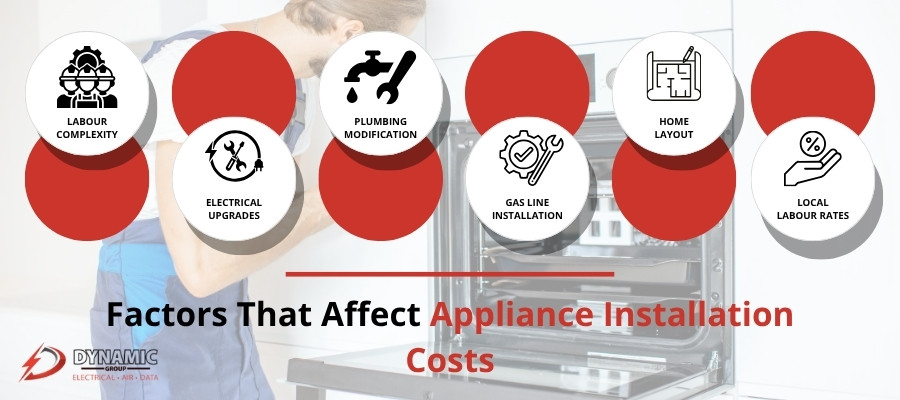
Labour Complexity
The biggest cost driver is the difficulty or complexity of the job.
Even an appliance as simple as a fridge with no water line (a plug-and-play device) might not need much labour.
However, installations with built-in units, compact cabinetry, or those that require coordination with two or more trades (e.g., a residential electrician and a plumber) will be more expensive.
The cost of a standard install in Australia is usually in the range of $150 to $400, and more complicated installations (moving appliances or fitting them into cabinetwork) cost between $400 to $1,200 or more.
Electrical Upgrades
Many modern appliances need special circuits or larger power outlets. Unless your house already has the appropriate setup, you will need a residential or a commercial electrician. For example:
- Installing a new power point: around $100–$300
- Adding a dedicated circuit for high-load appliances: $200–$800+
Older Australian houses are especially likely to need to comply with current safety standards.
Plumbing Modifications
Appliances such as dishwashers, washing machines, and fridges with water dispensers are usually plumbed in. If appropriate water supply and drainage points are in place, costs remain relatively low.
But when new pipework or drainage alterations are required, prices escalate rapidly. In Australia:
- Basic appliance plumbing setup: $150–$250
- More complex plumbing work (e.g. rerouting pipes) can be much higher, depending on the scope
Gas Line Installation (If Applicable)
Under Australian law, gas appliances, including cooktops, ovens, and heaters, must be installed by a licensed gas fitter. This contributes to labour and compliance costs.
The average cost of gas installation jobs is between $150 and $600, but may be higher depending on the complexity or whether a new gas line is needed.
Due to high safety requirements, gas work is rarely a DIY project in Australia, which also affects overall prices.
Home Layout
The physical layout of your home plays a bigger role than you think.
Your hard-to-access areas may lead to higher labour time and setup costs, particularly if you live in a high-rise apartment or an older building with limited space.
Location and Local Labour Rates
Electrician rates for installation directly depend on where you are in Australia. The labour cost is likely to be higher in some large cities, such as Sydney, Melbourne, or Perth, whereas in regional areas it can be lower, though it may include travelling or delivery charges.
Typical installation costs vary by state, for example:
- NSW / ACT: up to ~$400
- VIC / WA: often lower averages
- QLD: mid-range pricing depending on location
Moreover, factors such as tradie availability, demand, and timing might affect the final quote.
In Australia, the cost of appliance installation includes not only the cost of the appliances but also the infrastructure surrounding them. The more work you need done to make your home compatible, the higher your expenses will be.
Additional Costs to Consider
When budgeting for a new appliance, most people will only look at the bottom quote, but several additional costs can soon add up to the appliance installation cost.
Delivery Fees
The cost of transporting large appliances, particularly those that are big or delicate, is often charged by retailers and third-party providers and can impact the total appliance installation price.
Delivery costs in Australia are often between $50 and $150, depending on distance, accessibility, and whether stairs or a lift are required.
Old Appliance Removal and Disposal
Removing and disposing of your old unit is not always included, and this service can add $20 to $100 or more to your total appliance setup cost.
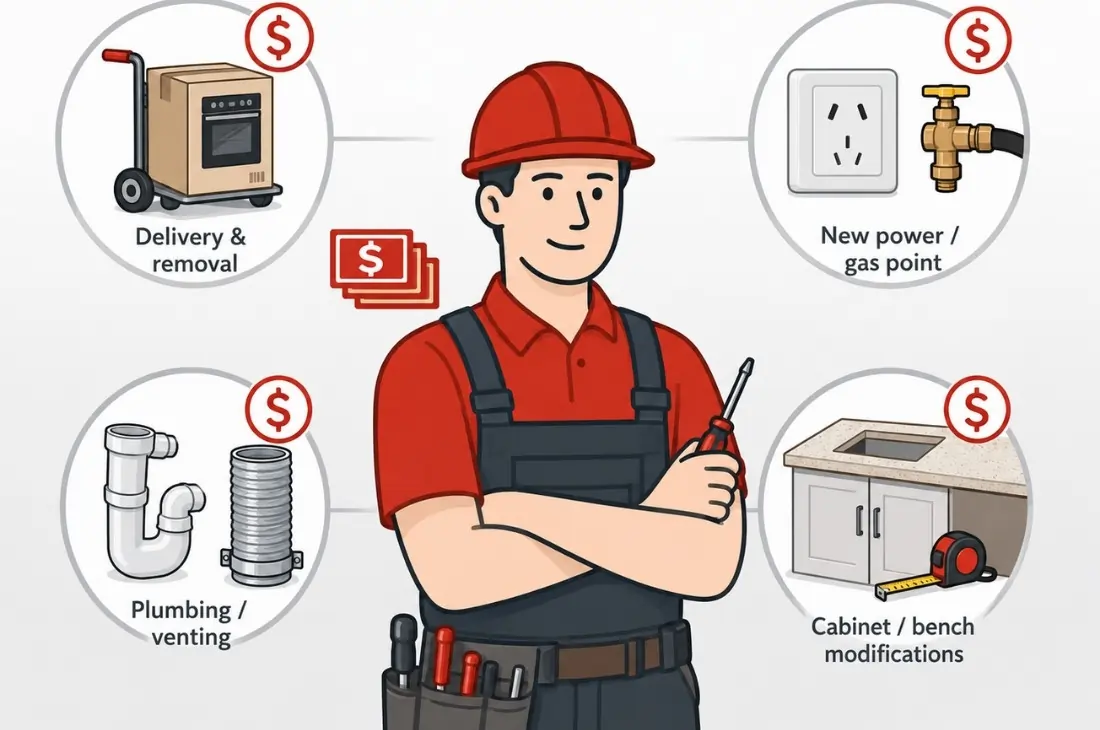
Proper disposal is important due to environmental regulations, and some retailers offer recycling services that are bundled into the appliance fitting cost.
Permits (If Required)
Some installations - especially those involving electrical or gas work - may require a permit or compliance certificate.
Licensed professionals in Australia are required to adhere to high safety standards, and the costs associated with permits may also increase your overall cost for appliance installation services.
Accessories (Hoses, Brackets, Vents)
Most appliances require additional accessories, such as water hoses, mounting brackets, or ventilation kits, which are not always included in the core price.
For example, the cost of installing a washing machine might increase if a new inlet hose or drainage fittings are required.
Wall Mounting or Cabinetry Modifications
Specialised installations, such as built-in ovens or a built-in dishwasher, may need to be integrated into the structure, which would have a major impact on costs.
Cabinet cutting, reinforcement, or ventilation upgrades can increase the cost to install an oven, especially in older Australian kitchens.
Similarly, adding appliances to the current kitchen setups may increase the dishwasher installation cost, as it will require more labour and materials.
When you include these extra expenses, you have a more realistic budget and can avoid unpleasant surprises when planning any appliance installation project in Australia.
Cost Comparison: Basic vs Complex Installations
Not every appliance installation is the same, and the level of complexity involved significantly affects your overall cost.
In Australia, hundreds, perhaps thousands of dollars can be the difference in the total price of appliance installation between a simple and a fully integrated installation.
Simple Plug-and-Play Installations
Simple installations are generally easy, less labour-intensive, and therefore the cheapest.
These are typically jobs that do not involve any alterations and fit an appliance to any existing power, water, or drainage connection.
Fully Integrated or Complex Installations
More complex installations, including cabinet alterations, new connections, or structural changes, can add to the appliance fitting cost.
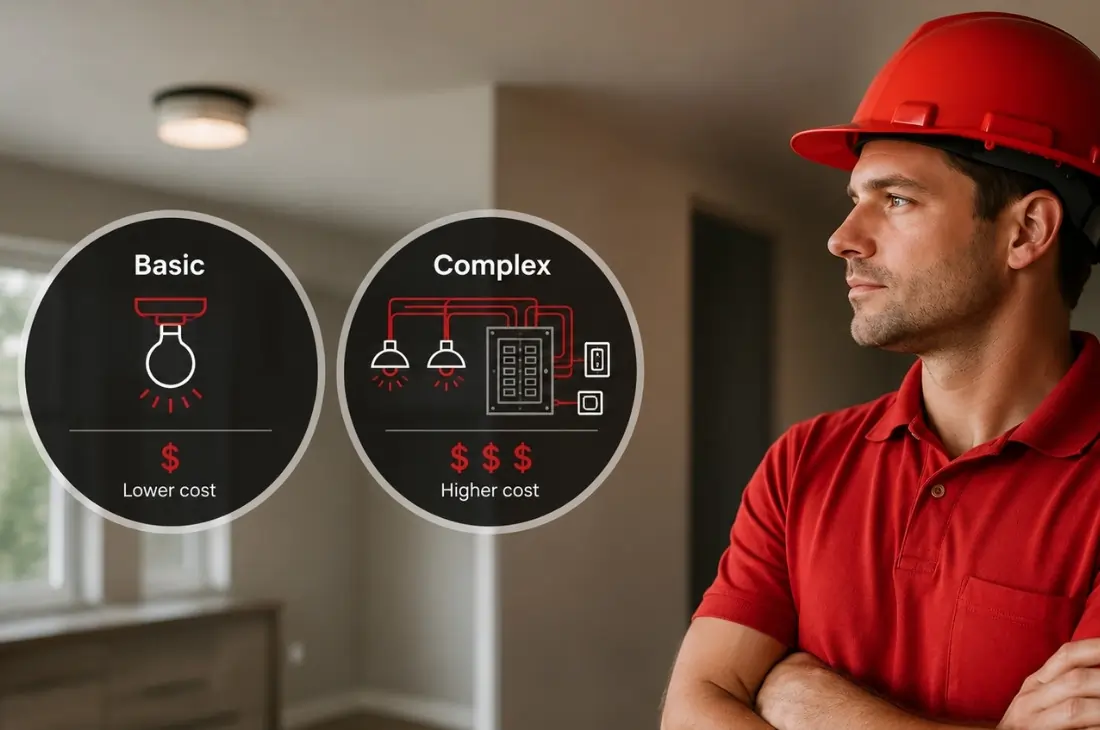
Such jobs tend to require more than one trade (e.g., electrician, plumber, or carpenter), which can substantially increase the total appliance installation charges.
Example Scenarios
- Basic Washing Machine Hookup: A simple connection to existing plumbing and power sources is one of the cheapest options.
- Built-in Oven with Cabinetry Work: Installing a built-in oven may involve cutting or adjusting cabinets and electrical or gas connections, which adds to the high cost of installation.
Homeowners frequently ask how much it costs to install an oven, but costs can vary widely depending on the level of customisation required.
As a result, the total cost of an oven installation is usually much higher than for a standard freestanding appliance setup.
The simpler the installation, the lower your cost; built-in or custom installations will increase your overall appliance service cost, as they require additional labour, resources, and skills.
DIY vs Professional Installation
Would you install the appliance yourself, or hire a licensed professional? This choice may make a big difference in your safety, compliance, and the overall cost of appliance installation.
Strict laws surrounding electrical and gas work in Australia imply that the decision is not only about savings, but also about your legal responsibility and long-term price.
DIY Installation
DIY installation can seem appealing for simple setups, especially to lower the cost of appliance installation.
Pros
- Lower Cost: Skipping labour fees can reduce your upfront appliance setup cost.
- Flexible Timing: The appliance can be installed at your convenience.
Cons
- Risk of Damage or Incorrect Setup: Wrongly attached connections may result in leakage, electrical fault, or appliance breakdown.
- May Void Warranty: Many manufacturers recommend professional installation to retain warranties.
- Legal and Safety Risks: In Australia, the majority of electrical installations require a licensed electrician, and any DIY work is unlawful and unsafe.

When to Hire a Professional
In most situations, it is not a choice to employ a licensed tradie; it is a legal requirement or strongly advised for safety and compliance reasons.
- Gas Appliances: In Australia, there are severe risks of leakage, fire, or carbon monoxide exposure, which inexperienced people can cause.
- Built-in or Integrated Units: Any appliances that require cabinetry or structural modifications are best left to the professionals to avoid an expensive mistake.
- Electrical Rewiring or Upgrades: Wiring, circuits, and power points legally require a licensed electrician.
Although DIY may be cost-effective in the short term, the risks, legal limitations, and long-term costs are usually higher than those of professional installation in Australia.
Tips to Save on Appliance Installation Costs
Appliance installation doesn’t have to break the bank if you plan and make smart choices to reduce your overall cost.
 Stack Install + Purchase
Many Australian retailers offer discounted or even free installation when you buy directly from them.
Compare Providers
Obtaining two or three quotes from licensed tradies helps you to find competitive rates.
Buy During Promotions
Free delivery and setup are common during major sales events, which can lower your costs.
Prepare Your Space Early
Ensuring appropriate access, space, and ready connections before the installer's arrival can save labour time.
Reuse Existing Connections
Use existing electrical, plumbing, or gas connections, provided they comply with current safety standards.

By planning and asking the right questions, one can reduce the overall cost of appliance installation services.
Appliance Installation Cost FAQ
Here are some of the most common questions homeowners ask when planning appliance installation, covering not just pricing but also safety, timelines, and what to expect.
We trust that the information provided has been useful, even if it didn't address every query. For any additional questions, please reach out to us directly, and we'll be glad to help.
The Next Step 
Balancing affordability with safety and quality is key when planning any installation, as cutting corners can lead to higher long-term appliance installation costs.
Choosing experienced, licensed professionals ensures your appliances are installed correctly, efficiently, and in line with Australian standards.
If you’re looking for reliable and professional service, Dynamic Group offers expert appliance installation across a wide range of household systems.
Our experienced team can handle everything from basic setups to complex installations.
Contact us for a quote and discover how easy and stress-free professional appliance installation can be.

Why Dynamic Group Is Your Top Choice for Electrician Jobs in Perth
Electrical work demands the utmost attention to safety, making your choice of service provider critical.
Dynamic Group meets all essential compliance, safety, and dependable service criteria. Our team of electricians is readily available for both residential and commercial electrical services.

Licenced & Qualified

Top Customer Service

Quality Workmanship

Reliable & Always On-Time

Fair & Competitive Pricing

Tidy & Clean Workplaces

Get in touch with us today to know more about our services or to request a quote.