


Fuse Types Explained: A Simple Guide for Homeowners
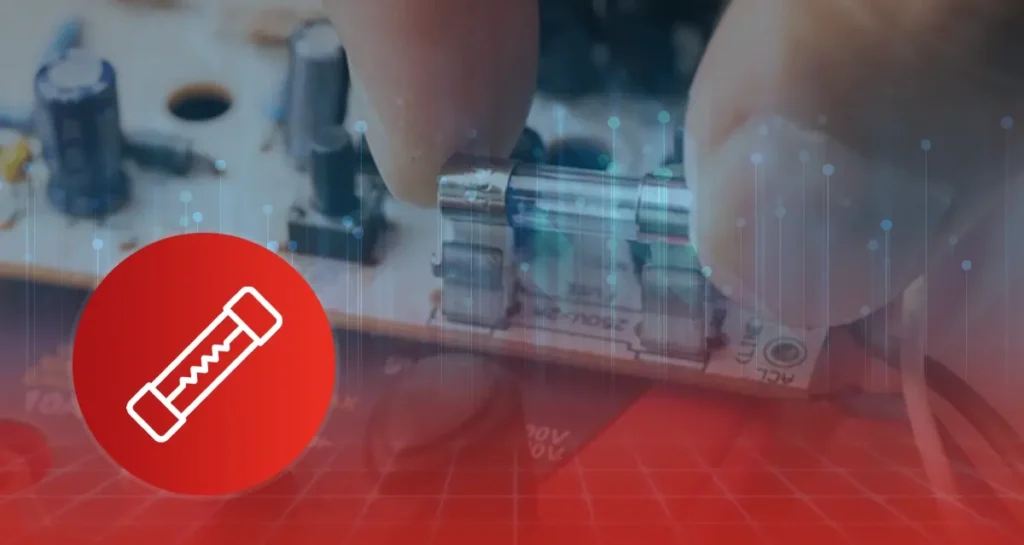
As an electrician in Sydney myself, with many years of experience, I have learned that the majority of homeowners do not give much consideration to the fuse box, at least not until something stops working. However, here is the reality: the little gadgets hidden in your electrical box are some of the most diligent safety mechanisms in your entire house.
Electrical fuses serve as the initial line of protection of your home against hazardous electrical faults, like short circuits, the same as a circuit breaker when it trips. Things are safely taken care of by your house fuse whenever you switch on a light, plug in the kettle, or charge your phone.
Throughout the years, I have observed various fuse types used in homes, including older rewirable fuses, cartridge fuses, newer plug-in designs, and circuit protection systems. All these types of fuses have a common aim: they stop electricity that may cause damage, only in different ways.
Having said that, we will proceed to the list of the various fuse types that you might have on your fuse at this very moment.
How a Fuse Works
One of the essential features in your electrical system is a fuse, which is both simple and crucial for safety. Imagine an electric fuse as a little guardian angel for your circuits, constantly present to prevent excessive amounts of electricity from passing through your wires.
The Simple Parts of a Fuse
Most house fuses are made up of just a few key parts:
- Metal wire or strip: This is the heart of the fuse. It’s designed to melt if the electrical current becomes too strong.
- Casing: Usually made of glass, ceramic, or plastic, it keeps everything enclosed and safe to handle.
- End caps or terminals: These allow the fuse to connect securely into the circuit.
When too much current flows, such as when multiple appliances are turned on simultaneously, the thin metal wire in fuses heats and melts. This interrupts the circuit and instantly disconnects the power, preventing the wires from overheating and igniting into a fire.
Common Fuse Types You’ll Find in Homes
Not all fuses are the same! There are various types of fuses used in different electrical works, just as light bulbs come in varying shapes and wattages. By understanding what type of fuse is used in your home, you can replace it safely, as well as know how your electrical system protects you. We will examine the most popular fuse types you may encounter.
Cartridge Fuses
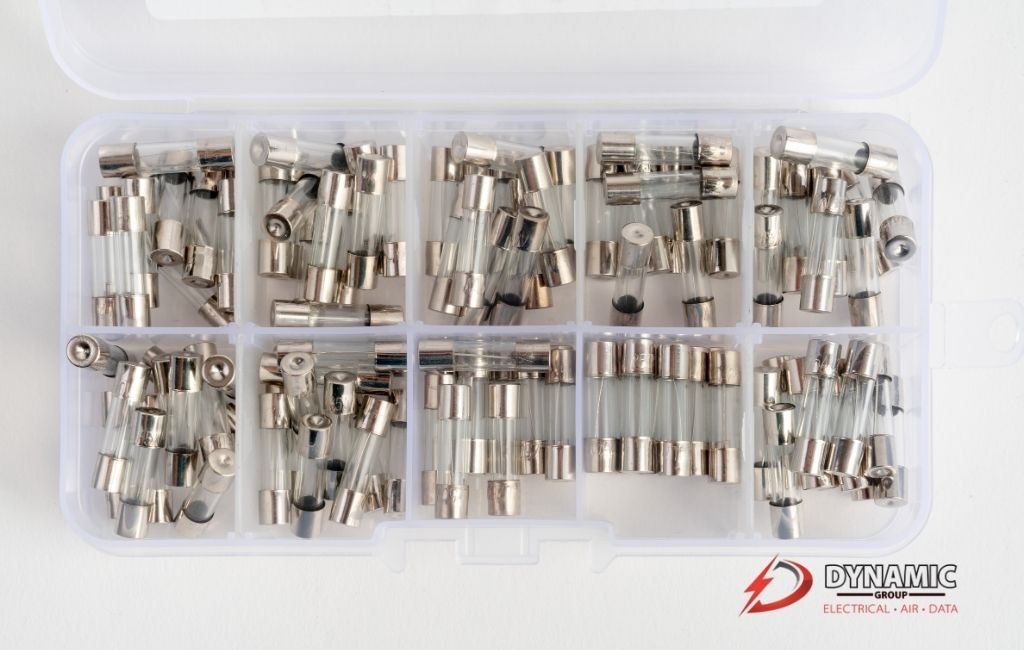
Cartridge fuses are completely enclosed in a solid, cylindrical case, typically made of ceramic or glass. These are frequently present in older houses or circuits that run high-powered loads, such as an oven, air conditioner, or water heater.
Pros:
- Very reliable and durable.
- Good for handling large amounts of current.
Cons:
- Once blown, the entire fuse needs to be replaced.
- It can be tricky to identify without opening the case.
This is among the most durable types of fuses, and although they might appear archaic, they are well known among many electricians due to their high performance.
Rewirable (Ceramic) Fuses
You might have seen these in your fuse box, provided you live in an older property. A rewirable fuse (also referred to as a ceramic fuse) uses a small piece of wire that melts when overloaded, and you can replace this wire yourself.
Pros:
- Inexpensive and easy to reset if you know what you’re doing.
- Ideal for simple circuits in older systems.
Cons:
- Easier to misuse (for example, using the wrong wire thickness).
- Becoming outdated as modern circuit breakers take over.
Although these fuse types served their purpose for many decades, most electricians are likely to suggest upgrading to the more recent system due to safety and convenience reasons.
Plug Fuses (Type S and Type T)
Plug fuses resemble miniature, circular plugs that are screwed into older fuse panels. There are two major types of fuses:
- Type S: Tamper-proof design that prevents using the wrong amperage fuse.
- Type T: Standard screw-in fuse without the safety adapter.
They are also colour-coded according to the fuse sizes, making it easy to determine the amount of current they can carry. For example, a 15-amp fuse could be blue, whereas a 20-amp fuse could be yellow.
Safety Rule: Never use a higher amperage plug fuse than the one that was blown out in the socket; this may be very dangerous.
Blade Fuses (Automotive and Modern Applications)
Blade fuses are found in cars; however, some new-fangled appliances and devices are also using them. They are compact, flat and carry two metal prongs which fit into a socket.
Pros:
- Compact and easy to replace.
- The clear plastic body makes it easy to see if the fuse is blown.
Cons:
- Not commonly used in household fuse boxes.
This demonstrates the design of different types of fuses to suit various purposes, such as protecting the circuits of your house or the electrical system in your car.
Understanding these fuse types helps you recognise what’s protecting your home and when it might be time for an upgrade. Whether it’s an older ceramic fuse or a modern cartridge fuse, each plays an important role in keeping electricity under control and your home safe.
Understanding Fuse Sizes and Ratings
Have you ever seen a fuse with numbers printed on it, such as 3A or 13A? Those figures are among the most significant details to know about electric fuses.
A fuse has a number on it that indicates the amp rating, which is the highest amount of electrical current it is capable of carrying.
- A 3-amp fuse (3A) is suitable for small appliances, such as lamps or radios.
- A 13-amp fuse (13A) is suitable for higher-powered items, such as kettles, toasters, or heaters.
When the current passing through the circuit exceeds the fuse’s value, the metal wire within the fuse melts, preventing the flow of electricity and thereby preventing overheating and fires.
Check here the difference between amps vs watts vs volts.
Why You Must Match Fuse Sizes Exactly
It is essential that when replacing a blown fuse, one uses a fuse of the same size and rating. When you use one that is too high (say, when a 3A fuse is replaced with a 13A fuse), the fuse may blow when it is supposed to (and a good portion of the current will be conducted, getting into your appliance or wiring and possibly causing damage).
Conversely, a fuse that is too small may blow out too easily even when it is operating normally. That may be annoying and could lead to unwarranted replacements.
Be sure to check the label or plug to ensure you are using the correct size fuse for the device.
Dangers of the Wrong Fuse Type or Size
Mixing up fuse types or using the wrong size can cause serious safety risks:
- Overheating: Wires can become dangerously hot if the fuse fails to blow when it should.
- Electrical fires: A rating that is too high can allow unsafe levels of current to flow.
- Appliance damage: A too-low rating can cause power to be cut suddenly, harming sensitive electronics.
House fuses and plug fuses are carefully selected to match your circuits and appliances. Using the correct types of fuses ensures that nothing goes wrong.
How to Tell If a Fuse Has Blown (and What to Do Next)
A blown fuse may be the cause when some appliance suddenly fails in your house or a light bulb refuses to light. Fortunately, it is not difficult to find and correct the issue if you know what to look for.
Common Signs of a Blown Fuse
Here are a few clear indicators that one of your house fuses may have blown:
- No power to part of your home, even though other areas are working fine.
- Appliances suddenly stop working, even though they’re plugged in.
- Scorch marks or a burnt smell near the fuse box or plug.
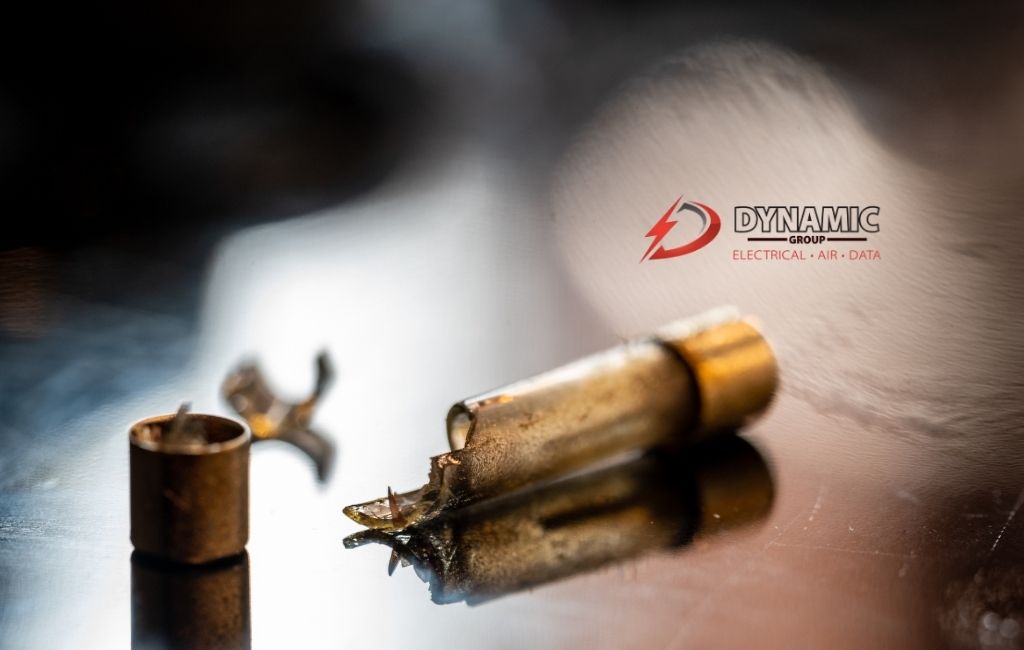
- The fuse looks blackened or cloudy (especially in glass cartridge fuses).
How to Safely Check a Fuse
Before you start, turn off the main power to your fuse box to ensure your safety. Then:
- Identify the suspect fuse. Look for the one connected to the area without power.
- Remove the fuse carefully. Different fuse types can vary in appearance, such as cartridge, plug, or ceramic, so check which type your home uses.
- Inspect the fuse visually. If you can see the metal wire inside, check whether it’s broken or burnt. In some types of fuses, the wire may melt or the glass may turn cloudy when the fuse is blown.
- Replace it with the same rating. Always use a new fuse with the same amp rating and type as the original.
If you’re ever unsure, don’t take chances — call a qualified electrician.
When to DIY and When to Call an Electrician
- DIY replacement: Safe if you’re just changing a plug fuse or swapping a visible blown fuse with one of the same rating.
- Call a professional: If your house fuse keeps blowing repeatedly, there may be a deeper issue. An electrician can solve and find faulty wiring or an overloaded circuit.
An electrician can check your system, find out the reason fuses are blowing, and ensure that your house fuses are properly rated to the electrical demand of your house.
A Quick Tip for Homeowners
Have a pack of spare fuses at home. This is particularly necessary if your fuse box still requires older-style fuses. In this manner, it will be prepared to make a speedy replacement and get your lights or sockets working again in no time.
Safety Tips for Homeowners
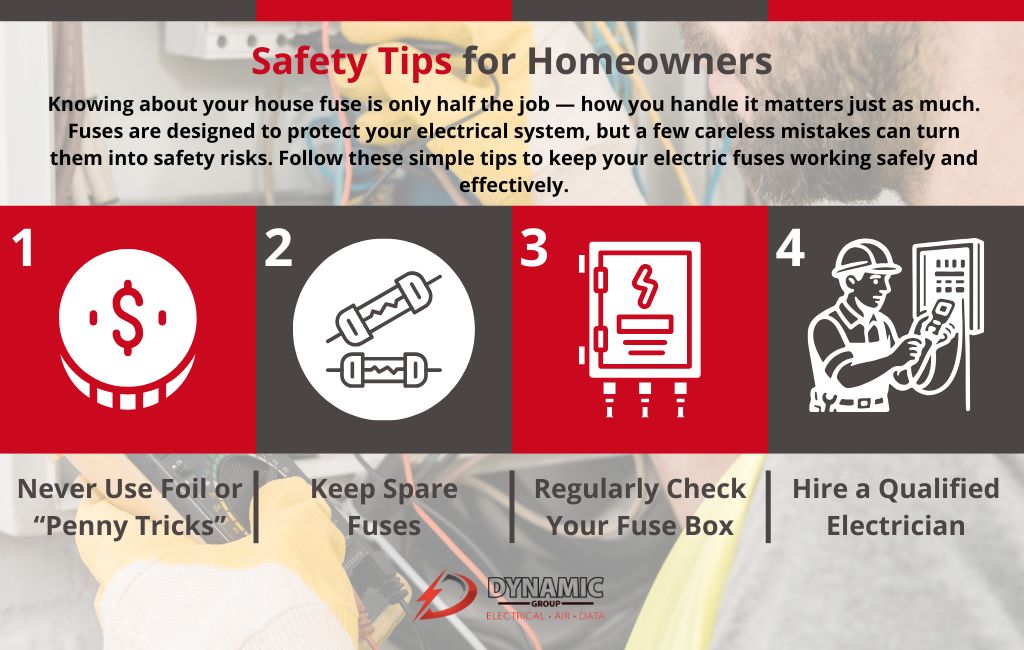
Knowledge about your house fuse is just one aspect of making your house safe; the way you treat it is equally important. Fuses are designed to protect your electrical system; however, a handful of irresponsible actions can make it a matter of safety concern. These are easy tips to follow to ensure that your electric fuses continue to function properly.
Never Use Foil or “Penny Tricks”
You may have heard about some of the old DIY shortcuts, such as wrapping a fuse in foil or inserting a coin into a socket. These may be witty, but they are so very unsafe. By doing so, it would bypass the safety mechanism that prevents excessive current from passing, which would be dangerous.
Always replace a house fuse with a proper, manufacturer-approved replacement of the same type and rating.
Keep Spare Fuses Handy
It is smart to have some extra fuse types at home. Designate them by their amp rating (such as 3A, 5A, 13A) so you can always grab the appropriate one when needed.
By having the right types of fuses available, you can be assured of restoring power quickly and safely without the urge to improvise.
Regularly Check Your Fuse Box
The fuse box or consumer unit is the centre of your electrical safety system in your house. Ensure that you take a glance at it every few months to check that it looks clean and untouched. Signs of trouble include:
- Burn marks or a burning smell
- Loose or discoloured fuses
- Buzzing or crackling noises
When you notice any of the following red flags, call a residential electrician to test your electrical fuse circuit.
Hire a Qualified Electrician for Replacements or Upgrades
It is quite all right to replace a simple plug fuse for most homeowners; however, when you need to replace or upgrade an entire house fuse box, it is always better to leave it to a professional. A qualified residential and commercial electrician can:
- Check that your fuse types are correct for your circuits
- They know electrical wiring colours in Australia ensuring proper earthing and wiring
- Upgrade older systems to safer modern alternatives
Electricians can also advise on whether your house would be better served by using old types of fuses or modern circuit breakers or RCD units to ensure it is much safer.
Keeping Your Home Protected!
Being aware of the different fuse types that exist allows you to identify when something is not right and guarantees the proper replacement or upgrade of the fuse. No matter how small each electric fuse is, it is an essential part of preventing overloads, securing your wiring and avoiding possible fires before they occur.
Check your fuse box today – it’s the first line of defence against electrical hazards in your home.
And in case you are not sure what you see, call Dynamic Group. We will handle the hard part, and you will have the pleasure of resting, knowing that your electrical safety in your home is in the hands of an expert with their electrical services.
We provide everything electrical here in Dynamic Group. Our licensed electricians are available to assist you with inspecting your house fuses, upgrading your house to a modern, up-to-date circuit protection system, or providing expert advice. With simple fixes to full electrical renovations, we ensure that your system is safe, efficient, and up to code.
Unmatched Electrical Services
Explore our services and see why we're recognised as one of Perth's top electrical service providers. Our dedication to exceptional customer care, clear communication, and the unmatched expertise of our experienced team make us stand out.

Competive Rates

Clean Work Sites

5-Star Service

Licenced & Qualified
Get in Touch Now
Complete the form below to get a customised quote or to have your queries answered.